Instagram Ads for DMs: The Complete Guide (Click-to-DM, Retargeting & Autopilot)
The complete guide to Instagram Ads that open DMs: click-to-DM, retargeting, Autopilot budget rules and server-side tracking.
Instagram ads work best when they do not dump people on a landing page — they work best when they open a conversation. This pillar guide covers the full ads stack: click-to-DM campaigns, retargeting audiences, autopilot budget rules, creative testing and server-side tracking.
Why DM-first ads outperform
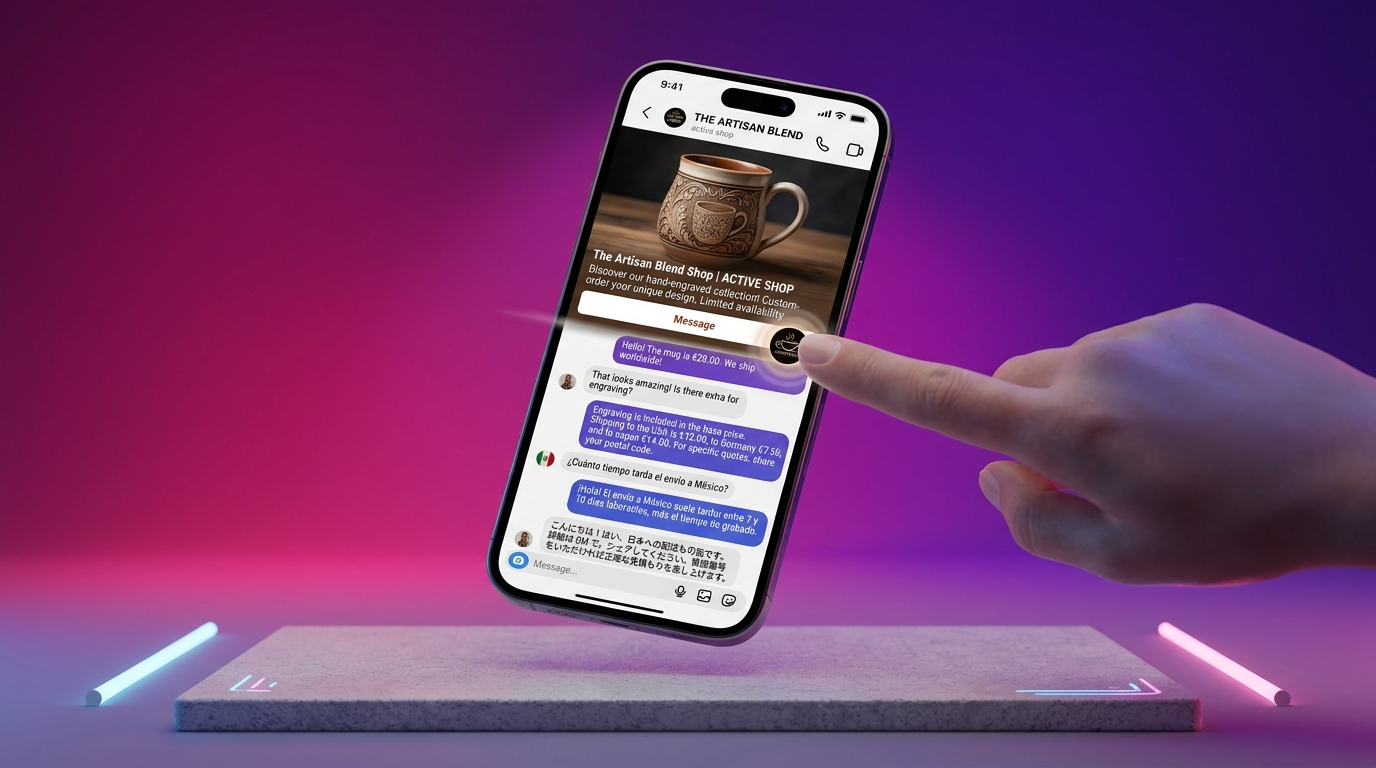
A landing page is passive; a DM is active. When someone taps "Message" on your ad, they have chosen to talk to you — the highest-intent action on the platform. With an automated flow behind it, every tap becomes a qualified conversation.
See how to run ads that open a DM.
Click-to-DM ads: setup
Connect your Instagram and watch the first AI-handled conversation in minutes. 14-day free trial, no credit card.
- In Meta Ads Manager, choose Click to Message.
- Select Instagram DMs as the destination.
- Set targeting, budget and placement.
- Write the ad creative and the pre-filled welcome message.
- Connect the ad to an automated DM flow.
The pre-filled welcome is your first impression — make it warm and specific to the ad.
Retargeting: the cheapest sales
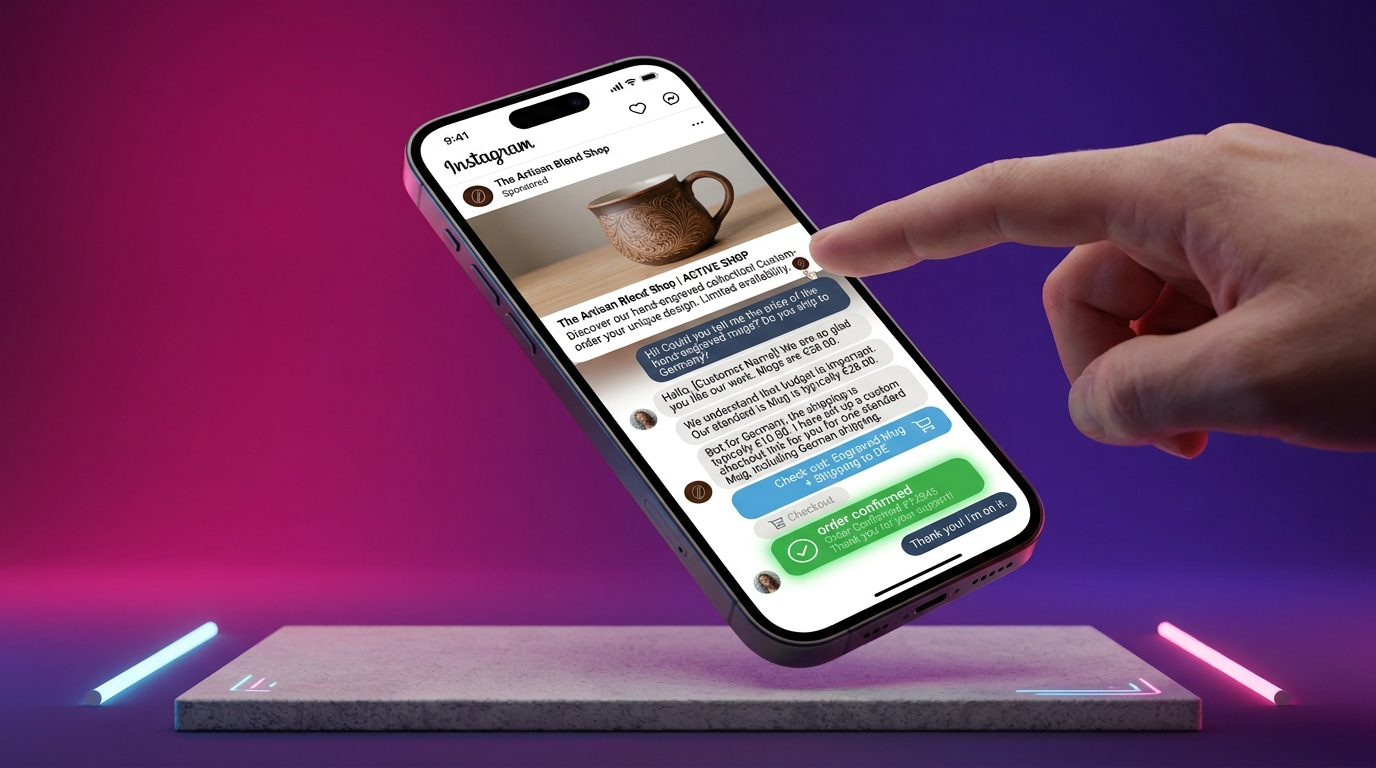
Launch a Click-to-DM ad, step by step
Pick the objective and placement, then tap the ad — watch it open a sales-ready DM.
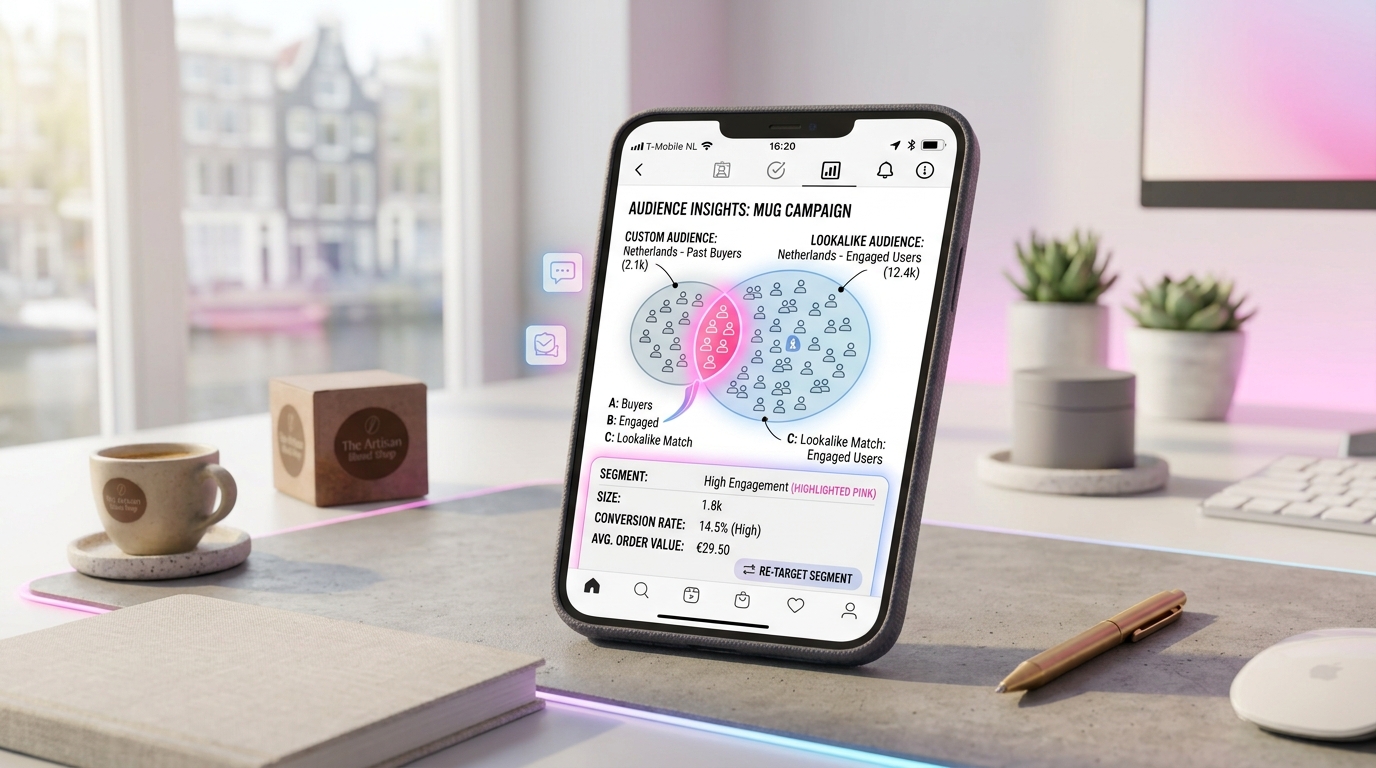
Cold traffic is expensive. The people who already engaged are the easiest to convert. Build audiences from:
- Engagement — people who commented or messaged.
- Leads — prospects captured in the DM.
- Lookalikes — new people who resemble your best buyers.
DM-based audiences are especially strong: a message is a stronger signal than a like. See retargeting engagement into sales.
Ad creative that converts
- Hook in the first frame — the scroll stops there, not later.
- One clear promise — not three.
- Social proof — numbers, reviews, results.
- Native feel — ads that look like content win.
Let Advantage+ Creative auto-generate and test image, title, body and CTA variations — Meta finds the best combination for you.
Autopilot: ads that optimise themselves
Autopilot rules watch your metrics and act automatically:
- Pause a campaign when the cost per result crosses a threshold.
- Increase budget on a winner.
- Reactivate a campaign when performance recovers.
This is what lets you "set and forget" — the rules do the babysitting you would otherwise do manually at midnight.
The AI Ads agent
Beyond rules, an AI agent can create campaigns, set autopilot, build audiences and explain the numbers in plain language. You describe the goal; it builds the campaign and reports back. This is the difference between a dashboard and a teammate.
Conversions API: tracking that survives ad-blockers
Browser pixels lose data to ad-blockers and privacy limits. The Conversions API sends conversion events server-side, so attribution stays reliable. This matters for optimization: better data means better ad delivery.
For the click-to-DM tracking details, see the click-to-DM guide.
Insights that actually help
Break down performance by age, gender, country, device and placement. Knowing who converts lets you scale the right segment and cut the rest.
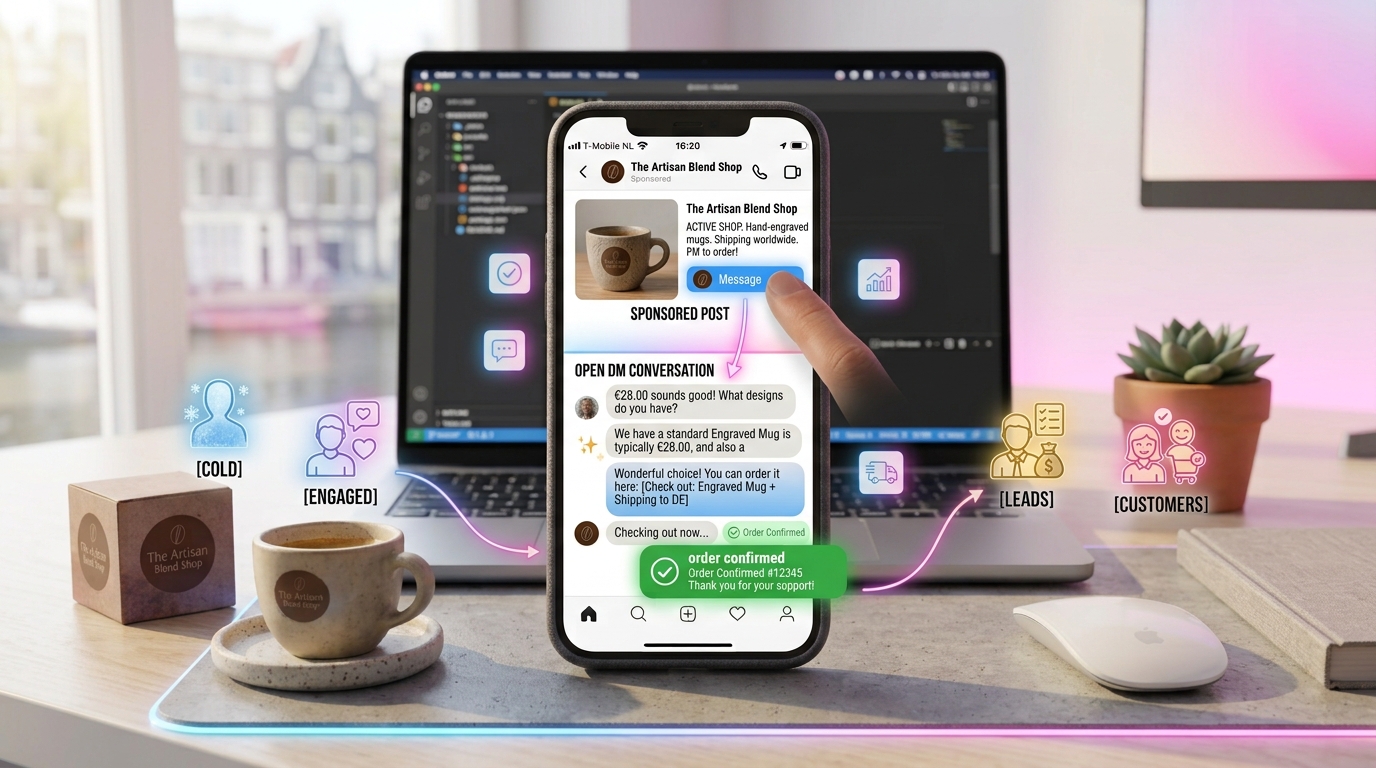
A full-funnel ads example
- Cold — a click-to-DM ad with a strong hook.
- Conversation — the DM flow qualifies and recommends.
- Unconverted — retarget with a different angle.
- Converted — lookalike audience for scale.
- Optimise — autopilot rebalances budget.
Common ads mistakes
- Sending traffic to a slow landing page. Use click-to-DM instead.
- No retargeting. Warm audiences convert far better.
- Ignoring creative. The hook decides everything.
- No server-side tracking. You lose attribution.
- Manual babysitting. Let autopilot handle thresholds.
Getting started
Launch one click-to-DM campaign, connect it to a qualifying flow, add a retargeting audience, and turn on one autopilot rule. Measure, then expand.
With GeniusInstaFlow, the whole ads stack — click-to-DM, retargeting, autopilot, Advantage+ and Conversions API — runs on the official Meta API, alongside the DM Sales Engine.
Choosing the right objective
Your objective determines everything about delivery. For DM-first selling:
- Click to Message — the go-to for conversations and sales.
- Conversions — when you have a pixel/CAPI-optimised purchase event.
- Traffic — only if you truly want a landing page visit.
- Engagement — for building retargetable audiences.
Most DM-first brands live in Click to Message plus a Conversions-optimised retargeting campaign.
Building a click-to-DM funnel, step by step
- Cold campaign — click-to-DM ad with a strong hook.
- Pre-filled message — warm, specific, invites a reply.
- DM flow — qualify, recommend, send the checkout link.
- Retargeting — reach non-buyers with a second angle.
- Lookalike — scale to people resembling your buyers.
- Autopilot — rebalance budget to the winners.
See the click-to-DM setup guide for the detailed walkthrough.
Budgeting and bidding
Start with a daily budget you can afford for at least a week — algorithms need data to learn. Avoid constant edits mid-learning; let a campaign run before judging it. Use broad targeting early to let Meta find your buyers, then narrow once you have signal.
Autopilot rules then take over: scale winners, pause losers, reactivate recoveries.
Common ad copy formulas
- Problem → solution — name the pain, offer the fix.
- Before → after — show the transformation.
- Question hook — "Still answering DMs manually?"
- Proof hook — a number, a review, a result.
Keep the CTA conversational: "Message us", "Send a DM", "Get the link".
Reading your ads data
- CTR — is the creative compelling?
- Cost per conversation — the real DM-first metric.
- Conversation-to-sale rate — does the flow close?
- ROAS — total revenue vs spend.
Optimise the weakest link: bad CTR is a creative problem, bad conversion is a flow problem.
Avoiding ad account problems
- Don't make prohibited claims.
- Respect Instagram messaging policy — the official API helps.
- Warm up new ad accounts slowly.
- Keep creative fresh — audience fatigue is real.
For platform-level safety, see automation safety.
Frequently asked questions
Do I still need Ads Manager? You can run most of it from one place; the AI agent handles creation, optimisation and reporting.
Can autopilot touch my budget? Only within the rules and thresholds you enable.
Is Conversions API hard? No — it wires up in a few clicks and survives ad-blockers.
Do click-to-DM ads work with my flows? Yes — every tap can enter any flow you have.
Ad creative: what stops the scroll
The creative decides whether anyone sees your offer. Winning patterns:
- UGC-style video — looks native, builds trust.
- Before/after — instant visual proof.
- Founder-to-camera — personal and credible.
- Problem callout — name the pain in the first line.
Test hooks relentlessly. The same offer with a better hook can triple the click-through.
Audience strategy: broad vs narrow
Modern Meta delivery rewards signal over micro-targeting. Start broad and let the algorithm learn, then:
- Layer interests only once broad stops improving.
- Exclude buyers from prospecting campaigns.
- Retarget engaged users with a different angle.
- Scale via lookalikes of your best buyers.
A 7-day ads launch plan
- Day 1 — set up click-to-DM campaign and connect the flow.
- Day 2 — launch 3 creative variants.
- Day 3–4 — let delivery learn, do not edit.
- Day 5 — review cost per conversation; cut the weakest creative.
- Day 6 — add a retargeting campaign for non-buyers.
- Day 7 — turn on one autopilot rule for budget.
One week gets you a working, self-optimising DM ad funnel.
How ads and the Sales Engine work together
The ad creates the conversation; the Sales Engine closes it. This pairing is what makes DM ads so effective: the click does not land in a void, it lands in a system that qualifies and sells. See the Sales Engine guide.
Advantage+ Creative in detail
Advantage+ Creative lets Meta automatically generate and test variations of your image, headline, body text and call-to-action. Instead of manually building dozens of ads, you provide assets and Meta assembles the best combinations per user.
When to use it:
- You have limited creative resources — let Meta do the combinations.
- You want fast learning — more variations mean faster optimisation.
- You are scaling — it keeps creative fresh automatically.
When to be careful: if brand consistency is critical, review the generated variants before scaling.
E-commerce vs services: different ads playbooks
E-commerce: lead with the product, show it in use, mention the price or offer, and make the click-to-DM welcome message product-specific with a pre-filled cart link.
Services: lead with the outcome (not the service), use proof and testimonials, and make the welcome message start a qualification — not a hard sell.
Local businesses: lead with proximity and availability, and make the first DM answer hours and bookings instantly.
The ad creative changes; the DM flow does the consistent selling behind it.
Budget mistakes that waste money
- Editing a campaign during the learning phase — resets optimisation.
- Too many audiences — fragments data and slows learning.
- Killing a campaign too early — give it at least 3–5 days.
- No retargeting — you pay twice for the same person.
- No autopilot — you babysit instead of scaling.
Each of these is easy to avoid once you know them.
When NOT to run ads
Ads amplify what already works. Before spending, make sure:
- Your DM flow converts organically first.
- Your offer and pricing are proven.
- You can handle more conversations than you get today.
If organic DMs do not convert yet, fix the flow before buying traffic — otherwise you scale a leak.
A complete click-to-DM example
Here is a full example for a skincare brand:
- Ad: 15-second UGC video showing the serum being used, headline "Sensitive skin? This is for you."
- CTA: Send message.
- Welcome DM: "Hey! Thanks for reaching out — what skin concern are you tackling?" with 3 quick replies.
- Qualify: one budget/deadline question.
- Recommend: the matching product with a product card.
- Close: a pre-filled checkout link.
- Retarget: non-buyers see a testimonial ad; buyers seed a lookalike.
This one funnel acquires, qualifies, converts and scales — all on the official Meta API.
Scaling winning campaigns
When a campaign works, scale carefully: increase budget in steps (20–30% at a time), duplicate into new audiences rather than over-spending one, refresh creative before fatigue sets in, and let autopilot handle thresholds while you focus on strategy. Scaling is a rhythm, not a switch.
Frequently asked questions (part 2)
How much budget do I need to start? Enough for at least a week at a comfortable daily spend — algorithms need data.
How long until ads are profitable? Give it 1–2 weeks of clean testing before judging.
Can I run ads without a website? Yes — click-to-DM ads go straight to the conversation.
Do retargeting audiences expire? They refresh as long as the campaigns run.
Creative testing framework
Winning ads come from systematic testing, not luck. Test in this order:
- Hook — the first 3 seconds / first line.
- Angle — the core message (price, speed, quality, result).
- Format — UGC video, carousel, static.
- CTA — "Message us" vs "Get the link".
Test one dimension at a time. When a hook wins consistently, move to the next dimension. This is how you build a library of proven creative.
Audience layering for scale
As you grow, structure audiences into layers: cold (broad) for discovery, engaged for people who interacted but did not buy, leads from the DM, and customers for upsell. Each layer gets a different message — that is the difference between spray-and-pray and a real acquisition system.
Automation rules you should set first
- Pause rule — pause when cost per result exceeds your max.
- Scale rule — increase budget when ROAS crosses a threshold.
- Reactivate rule — restart a paused campaign when it recovers.
Three rules cover most optimisation. Set them and stop babysitting.
Reporting: the numbers that matter
Skip vanity metrics. Watch cost per conversation, conversation-to-sale rate, and ROAS. If cost per conversation is low but sales are low, the flow is the problem. If cost per conversation is high, the creative or audience is the problem. Fix the bottleneck, not the wrong thing.
One more useful view: cost per DM vs cost per sale. The gap between them is your flow efficiency. Improving the flow lowers cost per sale without touching your ad spend — which is the cheapest optimisation available.
Conclusion
Instagram ads work best when they open a conversation. Pair click-to-DM campaigns with a qualifying flow, retarget the engaged, and let autopilot optimise. That is a machine that acquires and converts, not just one that spends.
GeniusInstaFlow brings the whole stack together — ads, AI agent, autopilot, retargeting and CAPI — on the official Meta API.
Put this into practice
Build your first AI workflow in minutes — the Sales Engine, Flow Builder and multilingual templates are ready.